

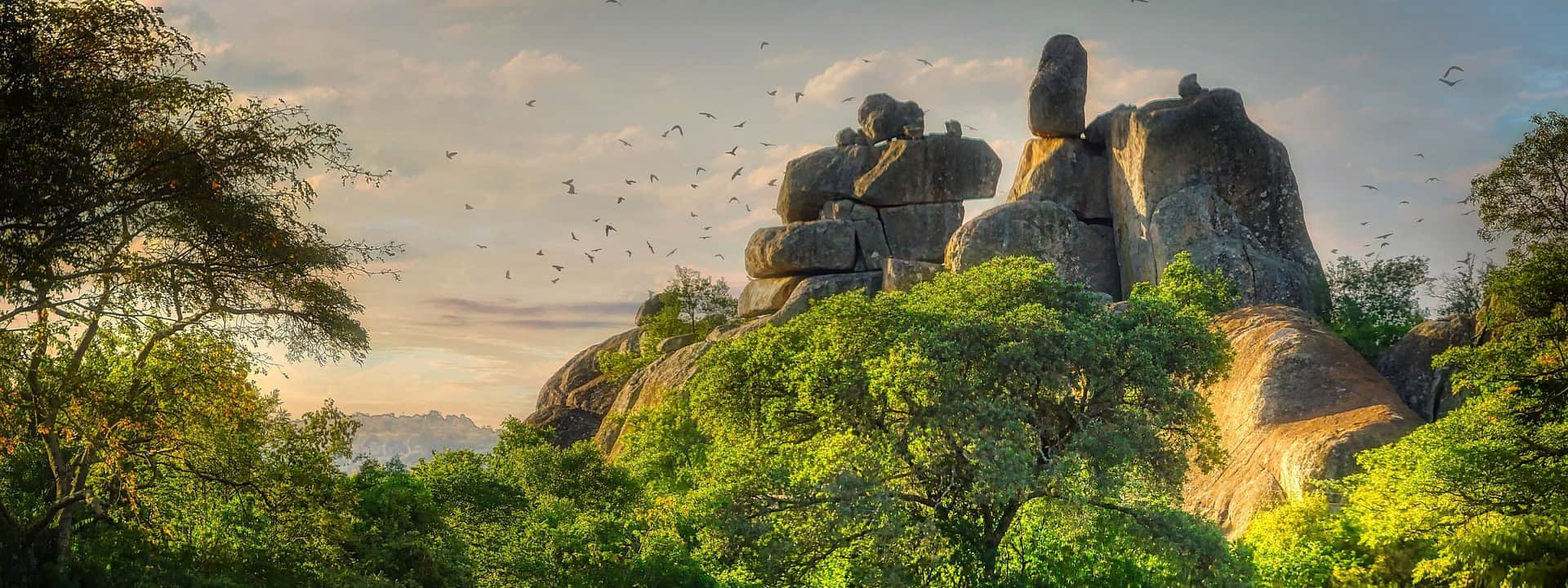
Getting Around Zimbabwe
Created By Cawston Encounters
Getting Around Zimbabwe – Easier Than You Think
Zimbabwe is one of Africa’s most rewarding destinations – ancient landscapes, extraordinary wildlife, and a warmth of welcome that keeps visitors coming back.
If you’ve been hesitant about navigating the country, we’re here to reassure you: getting around Zimbabwe is straightforward, and we handle all the logistics so you don’t have to think about a thing.
Here’s how a classic Zimbabwe itinerary works, from the moment you land.
Fly into Bulawayo
For international visitors, we recommend flying into Joshua Mqabuko Nkomo International Airport in Bulawayo, Zimbabwe’s second city and the gateway to the south-west of the country.
Ethiopian Airlines flies directly into Bulawayo (as well as Victoria Falls), making it easy to connect from a wide range of international origins. From Johannesburg, there are daily connections with multiple carriers.
Bulawayo itself is a gracious, unhurried city – fondly known as the “City of Kings” – and worth a night or two if time allows. But most guests are eager to get into the bush, and the real adventures begin just outside the city limits.
Stop One: The Matopos — Ancient Hills, Living Wildlife
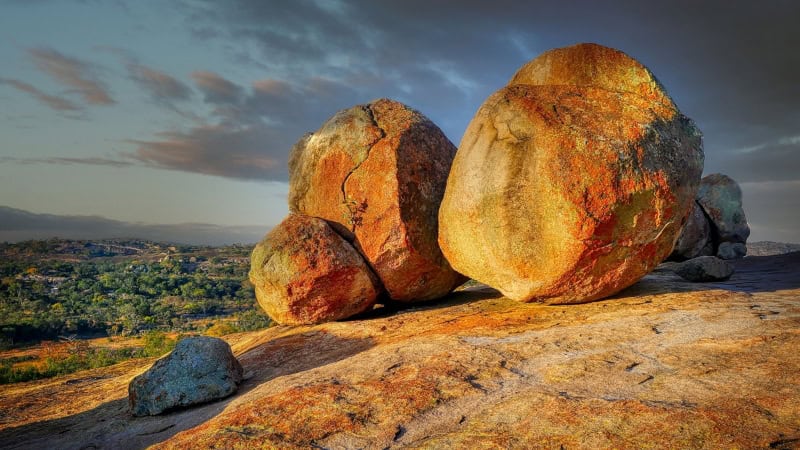
A road transfer from the airport takes you south on a smooth, well-maintained tar road. In under an hour – roughly 55 km – the landscape begins to transform dramatically.
Enormous granite boulders, some balancing impossibly on top of each other, rise from the bush. You have arrived in the Matobo Hills, a UNESCO World Heritage Site.
These hills are among the oldest exposed rock formations on Earth. The granite was formed over two billion years ago, and the landscape you see today has been shaped by hundreds of millions of years of erosion – whalebacks, castle kopjes, and balancing boulders stretching across several thousand square kilometres.
It is a place of extraordinary beauty and deep spiritual significance, sacred to the Ndebele people and home to the grave of both the great king Mzilikazi and, on the summit of “World’s View”, Cecil John Rhodes.
Sheltered within the caves and overhangs of these ancient rocks are San (Bushman) rock paintings – some of the finest examples anywhere on the continent, depicting wildlife, hunting scenes, and the rhythms of daily life as they were lived thousands of years ago. With a knowledgeable guide beside you, these images come alive.
The Matopos is also one of the best places in Africa to encounter black and white rhinoceros on foot. Matobo National Park is a designated Intensive Protection Zone, and the rhino here are closely monitored and well protected.
This means that, accompanied by an experienced guide, you can approach within metres of these magnificent animals as they graze – an experience that will leave you humbled.
There are several excellent lodges to suit different tastes and budgets, all within easy reach of the park. We will recommend the right one for you and arrange your transfer and accommodation seamlessly.
We suggest at least two to three nights here. There is more to discover than most guests expect.
Stop Two: Cawston Encounters — The Bush Comes to Life from the Saddle
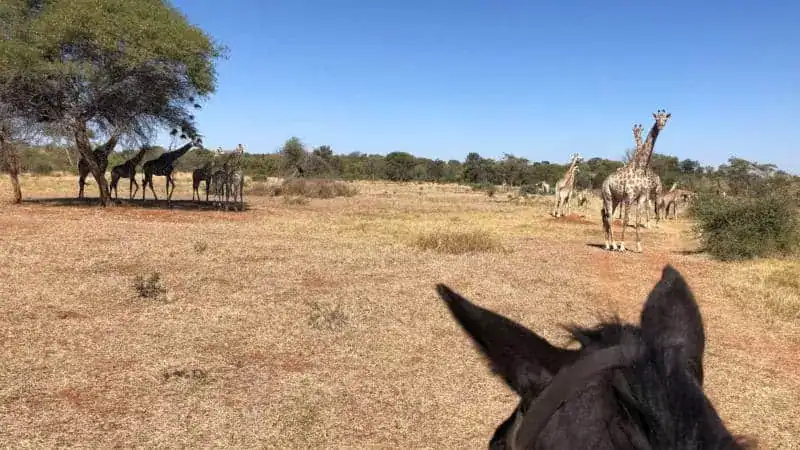
From the Matopos, a road transfer takes you north through Bulawayo and out to Cawston Encounters, a family-run wildlife ranch situated about 60 km north of the city on a magnificent 32,000-acre private estate.
Cawston is unlike anywhere else on the itinerary. At its heart, horseback safaris that allow riders to move through the bush at the pace of the wildlife around them as horses blend seamlessly into the environment.
There is a cross-country course for more adventurous riders, bush picnics, and tailor-made rides from two hours to a full day.
Not a rider? No problem at all. Non-riding guests are very well catered for with game drives, game walks, wildlife photography, birding, and simply sitting at the waterhole watching the world go by. Cawston’s small, intimate camp – just five rooms – and family hospitality make it a genuinely special stop.
The food alone is worth the visit: organic and largely produced on the farm itself, from the dairy and vegetable gardens to home-grown organic meat, fresh eggs, and homemade bread baked daily.
Stop Three: Victoria Falls — Wonder and Adrenaline
Here is where we give you the most important practical advice of the trip.
The road between Bulawayo and Victoria Falls – a 440 km stretch – is currently undergoing a major rehabilitation programme and remains in poor condition in many sections, with diversions, construction traffic, and journey times of up to ten hours.
We strongly recommend that guests take the short flight from Bulawayo to Victoria Falls rather than attempt the road.
Since August 2025, Fastjet Zimbabwe operates direct scheduled flights between Bulawayo (BUQ) and Victoria Falls (VFA) four times a week – the flight takes under an hour and removes all the frustration of the road entirely.
The road upgrade is progressing, with full completion expected through 2027, but for now the flight is by far the better option and we will include it in your arrangements.
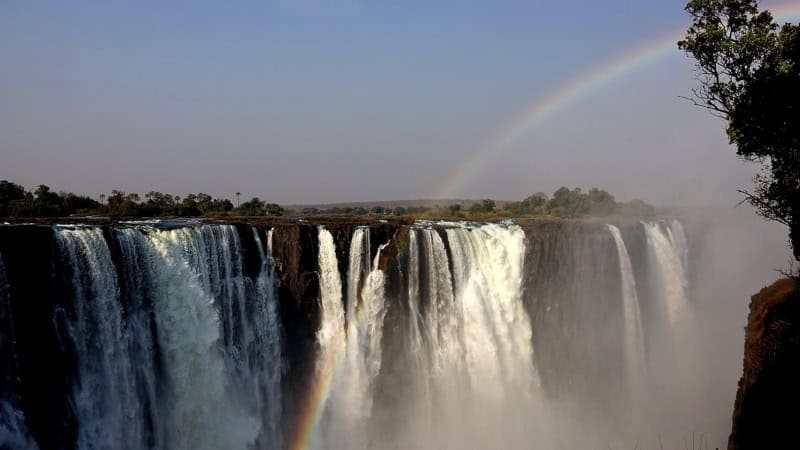
Victoria Falls needs little introduction. Known locally as Mosi-oa-Tunya – “The Smoke That Thunders” – the falls are one of the seven natural wonders of the world, and the widest curtain of falling water on the planet. Standing on the edge of the gorge as the spray rises to meet you is a moment that stays with you for life.
The good news for logistics: you do not need a car in Victoria Falls. The town is compact, everything is walkable or a short shuttle ride away, and for the adventurous there are electric bikes to hire. This makes it a wonderfully easy destination.
And there is no shortage of things to fill your days:
- Walk the rainforest path along the lip of the falls
- Bungee jump 111m from the Victoria Falls Bridge – one of the most iconic leaps in the world
- Zipline across the gorge
- White-water raft the Zambezi – some of the best commercially rafted rapids anywhere
- Take a sunset cruise on the upper Zambezi, watching elephant and hippo at the water’s edge as the light turns golden
- Enjoy a breakfast cruise above the falls, with fish eagles overhead and your coffee in hand
- Visit the adjoining Zambezi National Park for game drives in search of the Big Five
Most guests spend three to four nights here – and wish they had more.
Optional Extension: Hwange National Park
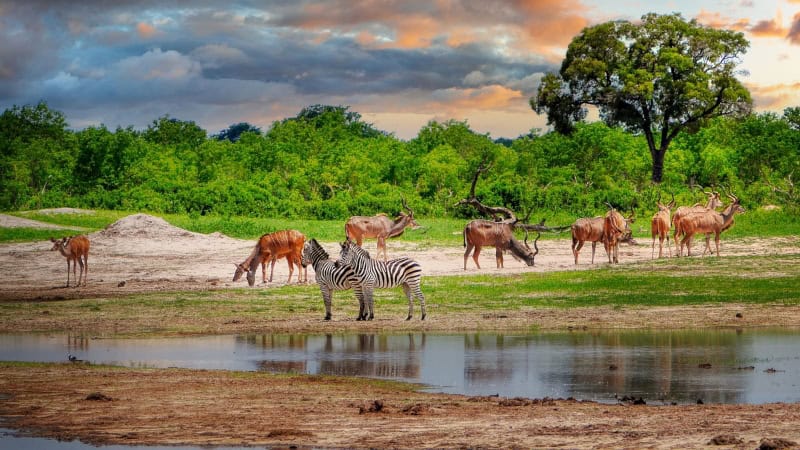
For those who want more of the wild, Zimbabwe’s largest national park – Hwange – is waiting. Road transfers are possible from Victoria Falls to Hwange; however, we can arrange a chartered flight into one of the park’s bush airstrips. These flights are sold on a per-seat basis, making them far more affordable than most people expect.
Hwange is renowned above all for its elephants – the herds here are among the largest anywhere in Africa – but the park is also home to lion, cheetah, wild dog, sable antelope, and a spectacular diversity of birdlife.
There are beautiful lodges and tented camps to suit every level of comfort, from intimate and rustic to full luxury. We will match you with the right one.
A few nights in Hwange before flying on to Victoria Falls – or as a side trip from it – completes a Zimbabwe circuit that covers the full range of what this extraordinary country offers.
Flying Home
Most international guests depart from Victoria Falls Airport, with direct connections to Johannesburg and onward to the world.
Ethiopian Airlines also flies directly from both Victoria Falls and Bulawayo, providing excellent options for those connecting through Addis Ababa to Europe, Asia, and beyond.
Let Us Handle It All
The single most important thing to know about getting around Zimbabwe is this: with the right people organising it, the logistics are easy.
We arrange all road transfers, domestic flights, park entries, lodge bookings, and activity reservations. You simply arrive, and the country unfolds in front of you.
If you’d like to start planning your Zimbabwe journey, get in touch and we’ll put together an itinerary tailored to your interests, travel dates, and budget.
Zimbabwe is waiting. It’s closer – and easier to get around – than you think.
Found this article insightful or useful ? Share the love…